Root Word: Renewal
July 2026
This Root Word series examines the words and concepts we use in herbal medicine and practice.
Renewal means the act of starting again or forming anew. A situation in which something begins again after having stopped for a time. Or a process where something changes and improves. The prefix of ‘re-‘ is from the Latin meaning back to the original place or again. Whilst niwe is the old English for new, similar to the Greek neos meaning new, youthful, fresh or to regenerate. So we have ‘again new’, hinting at a cycle or return.
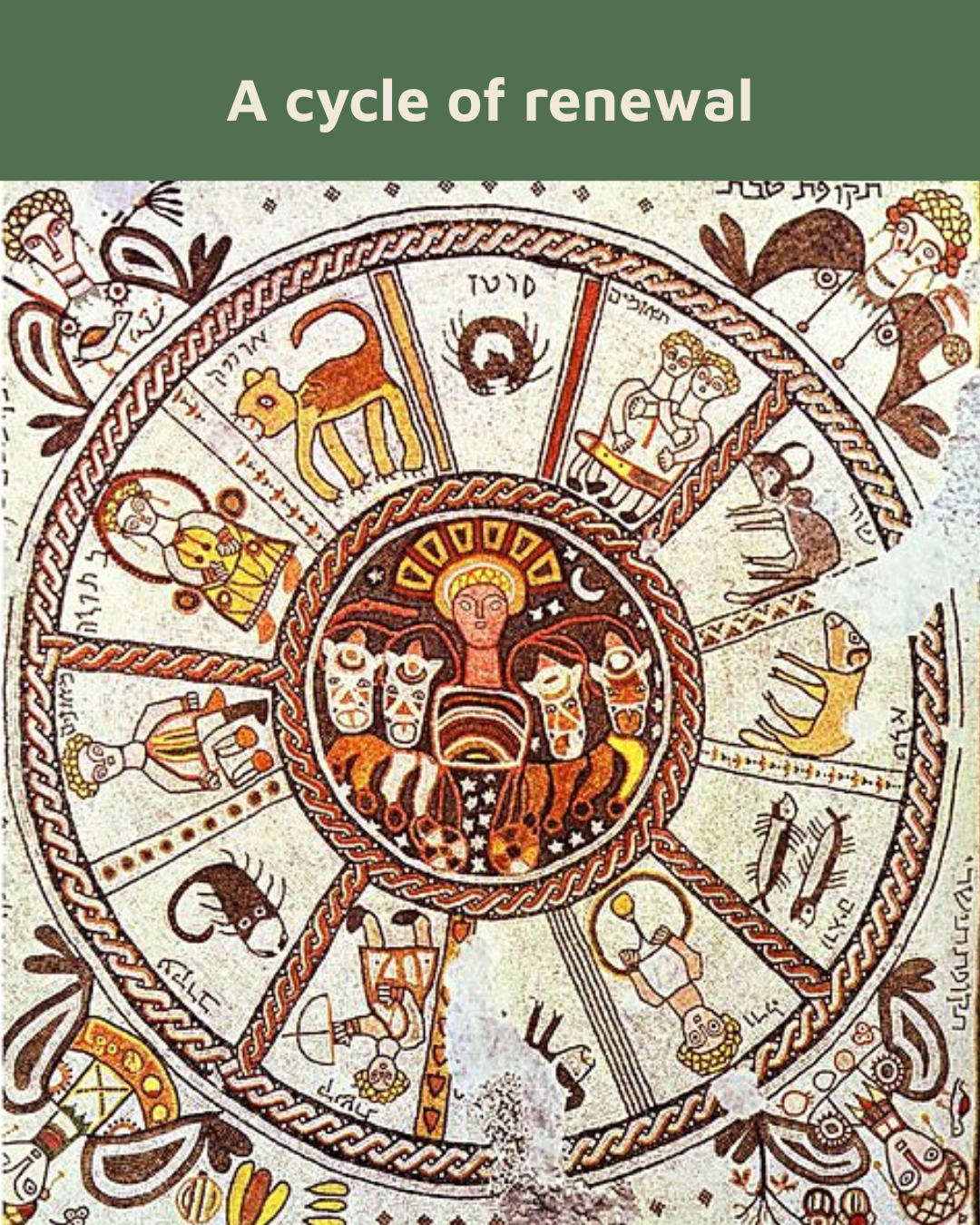
The word renewal reinforces the cycles we experience on a human and planetary level. After the darkness of the night, the sun returns to rise in the east. Plants die back in winter, but there is renewal and regrowth with the return of the light each year. The astrological wheel of the zodiac illustrates these rhythms of nature, earth’s solar cycle, and renewal as an inherent pattern of life.
Herbal medicine knows that nature doesn’t pursue constant growth, but instead allows for periods of rest, and renewal.
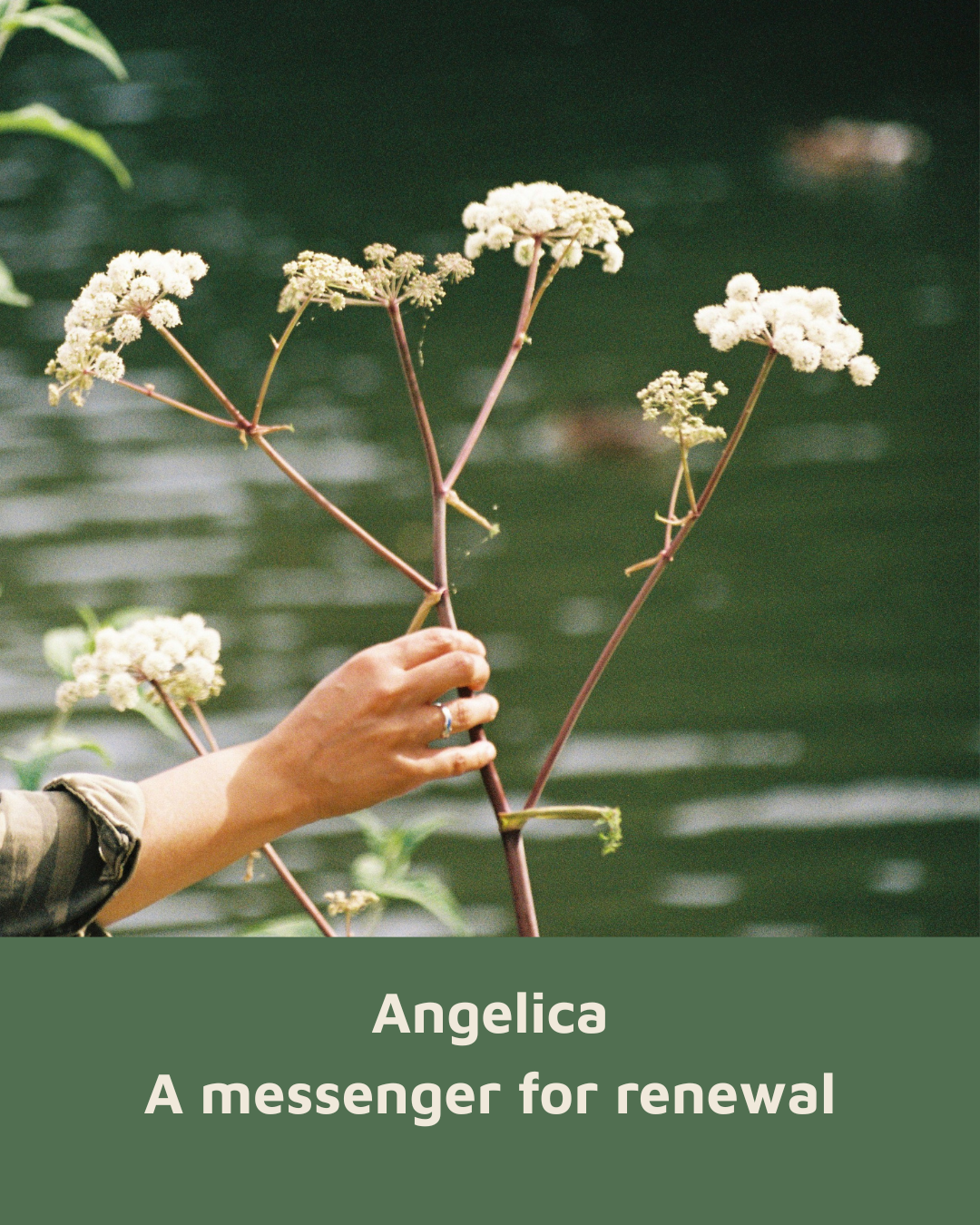
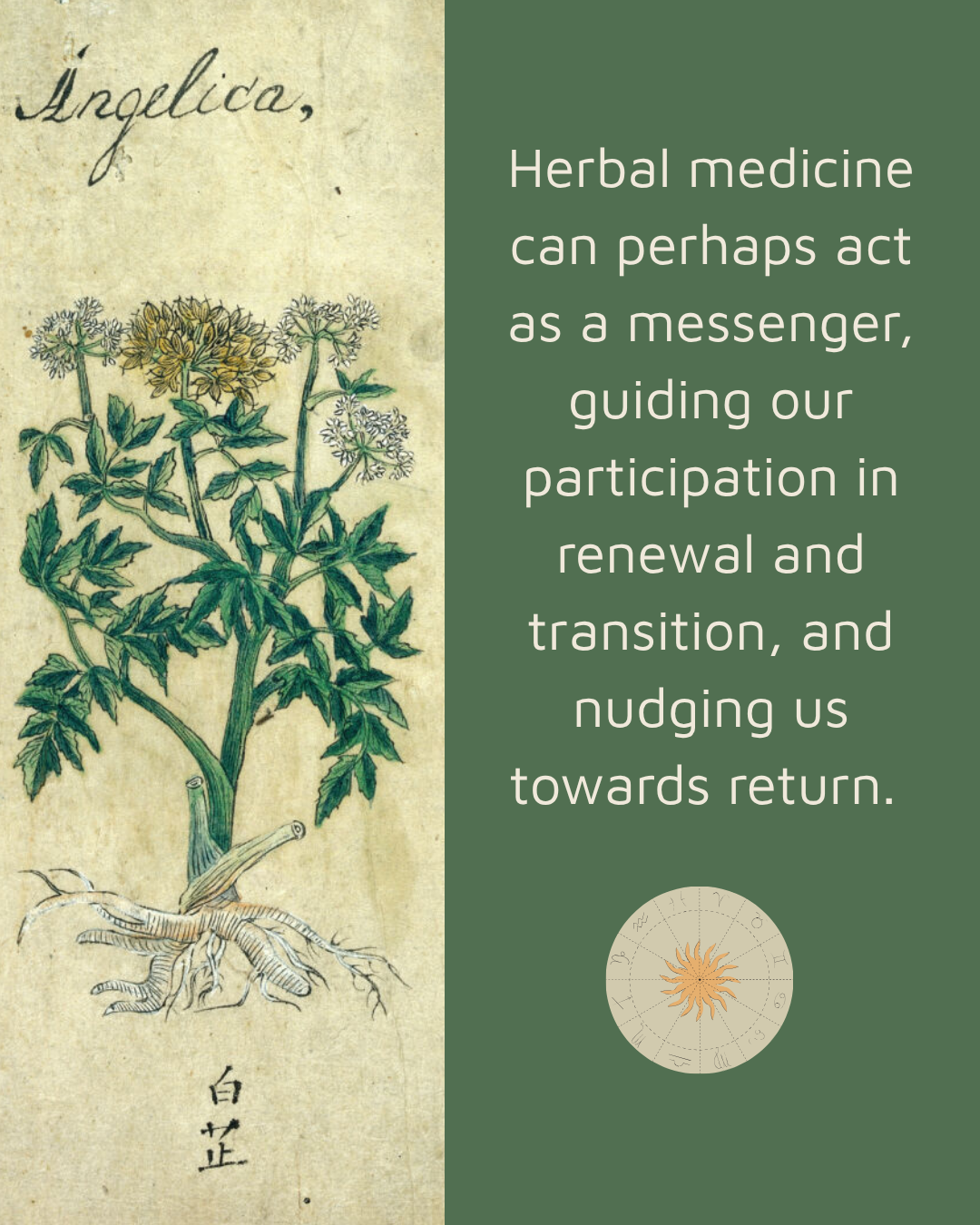
For me a medicinal plant that embodies renewal is Chinese angelica (Angelica sinensis). Its traditional name dang gui translates as ‘state of return’ or more literally ‘expected to be back home’; it was said if you missed a relative who was away, sending them a piece of the root would mean they would come back.
It is one of the most widely used Traditional Chinese Medicine herbs, and described in the Divine Farmers Materia Medica, the oldest surviving Chinese text on herbs.
Here it is recommended as an ‘envoy’ to another species of angelica. In Chinese formulary an envoy can be described like a diplomatic messenger, harmonising the herbs and guiding the medicine to a specific place or system in the body where its actions can be carried out. Interestingly, angelós in Greek means messenger, as well as angel or heavenly spirit.
The plants polysaccharides and other constituents are thought to elevate erythropoietin, which enhances red blood cell production and formation. This promotes maturation of the component parts of the blood (white blood cells, platelets and so on), which in turn improves oxygenation, blood flow and other healthful aspects. Chinese angelica also acts on our stem cells, which have a crucial role in tissue renewal and regeneration. These cells are capable of travelling through the circulation to sites of injury to enable renewal and repair.
The plant is used in anaemia, where there is a lack of healthy red blood cells. I find it has special ability to rejuvenate where systems have been weakened by viral or bacterial illness, chronic stress, burnout, fatigue and debility, or following tissue damage, injury or surgery. It’s also known for its ability to regulate the female reproductive system, supporting certain types of menstrual and menopausal complaints, and is used as a postpartum tonic – a helpful ally in periods of transition and renewal.
Our Western angelica (Anglica archangelica) shown in the photo above is a different species to the Eastern one. It shares similarities, but they have different properties. Historically this plant was used as a digestive and aromatic, with blood purifying properties. It was used to protect against poisons and to ward off the plague in the Middle Ages. Elizabeth Brooke writes of its emotional virtues: ‘it is especially good for people who feel stuck in a rut, who need courage for a new start or big plan’.
Herbs like angelica remind us that herbal medicine can perhaps act as a messenger, guiding us towards participation in renewal and transition, nudging us towards return to balance, or helping to bring us back home to ourselves.
I sometimes spot angelica as a lone bystander on a damp grassy bank, next to flowing water. Its white flowers have a delicate ethereal look to them, forming little globe-like clouds of stars above. Be extra careful with identification of this plant as there are poisonous lookalikes within its family (Apiaceae or umbellifer) which can cause death, like hemlock. So I find it best to stick to using cultivated sources.