Root Word: Proanthocyanidins (and Scottish Honeyberries)
April 2026
This Root Word series examines the words and concepts we use in herbal medicine and practice.
I’ve come to love many herbal medicines and foods which contain proanthocyanidins – a word from the chemistry discipline for the blue and red pigments we find in plants. Learning a little about chemistry and categories can help us more fully understand a plants properties and medicinal benefits. This is especially true if the chemical is well researched, meaning lots can be deduced about how the plant acts and which patterns of imbalance it is suited to.
I find chemistry fascinating, seeing the world as being made of vibrating molecules and atoms participating in a cosmic dance of energy, as described by Fritjof Capra in his book The Tao of Physics, does feel mystical. But as he says, the model is incomplete and not quite adequate to describe natural phenomena or take into account our sensory perception.
Pro in organic chemistry as a prefix carries a few meanings, but is often a marker of facilitating a process and signifies an affinity with amino acids – which are the building blocks of our tissues, essential for collagen structure, repair and healing.
Antho in Latin is the singular of anthus, coming from anthos in ancient Greek, a noun meaning a flower, bloom, peak or brilliance.
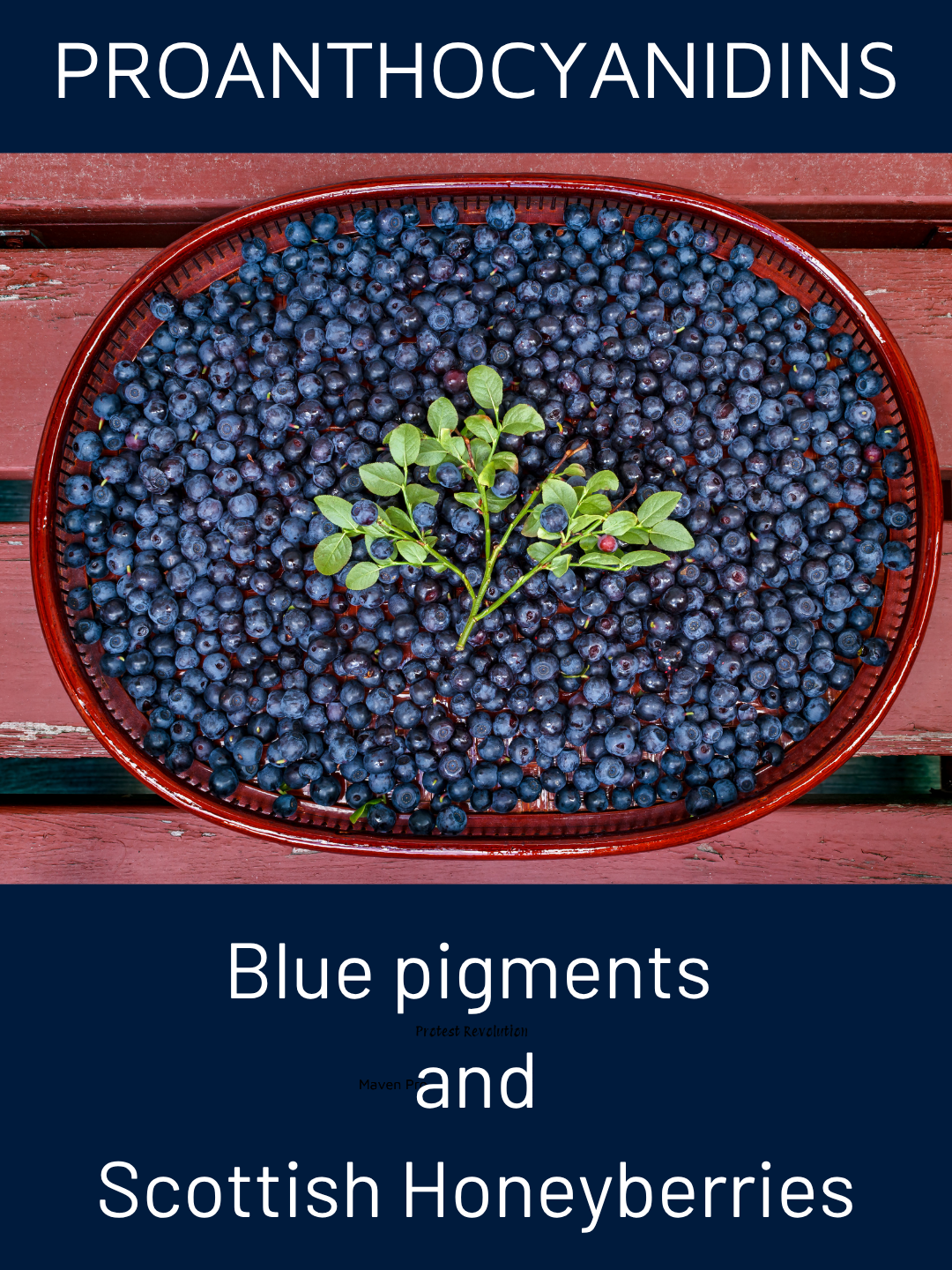
Cyan is borrowed from the ancient Greek relating to the hue of deep vivid blue found in cornflower, with cyanidin being the organic chemistry term for wide range of blue, red, purple, mauve and pink pigments of plants. Rich sources of these compounds can be found in bilberry, blueberry, honeyberry, cranberry, cherry, hawthorn, grapes, cocoa and cinnamon.
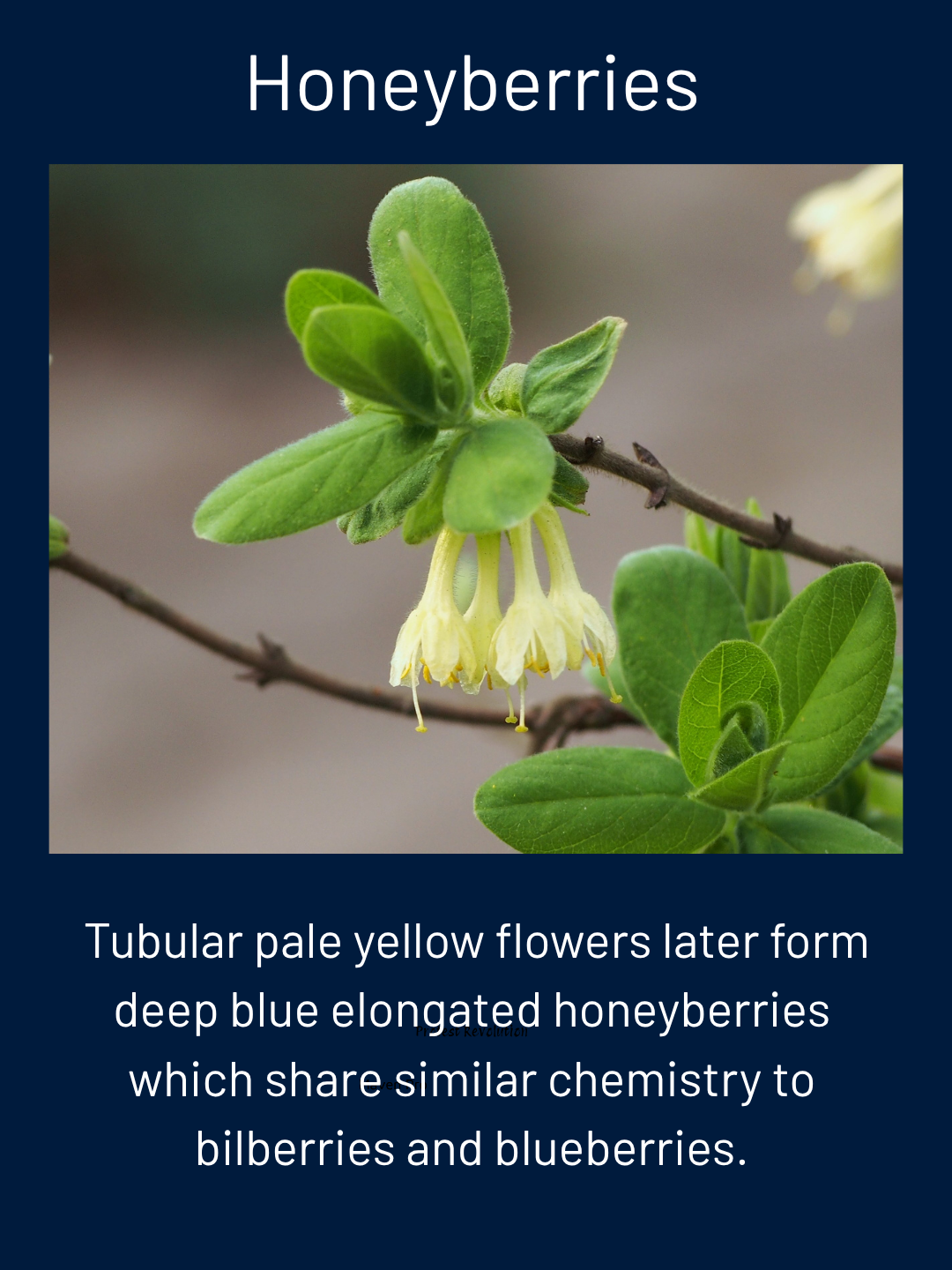
The compounds are highly antioxidant and research has found they dilate our blood vessels and help prevent inflammatory processes within the circulatory system.
In herbal medicine bilberry has been the most studied, showing positive effects on microcirculation at the peripheral regions of the body – areas further away from the heart. Bilberry has been used to treat and protect against neuropathy (commonly of the feet) and retinopathy of the eye, both linked with diabetes. The berry helps to stabilise connective tissue and protect integrity of tiny vessels and nerves.
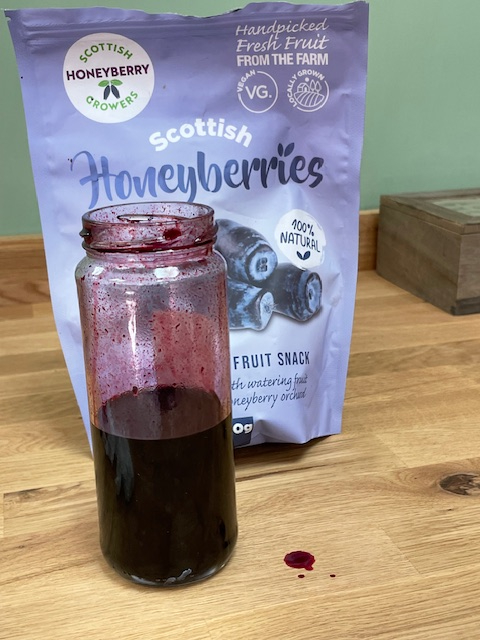
But a rich local source of proanthycyanidins are Scottish Honeyberries and I recently made an amazing tincture with these, very dark purple with a slightly syrupy consistency. The trees are a new cultivar in Perthshire and the berries now gaining popularity as a food and medicine in Western Europe. In the Far East they are better known, the juice is a longevity tonic in Japan and its use crosses over with our European bilberry. The trees are highly resistant to cold and frost and low temperatures and more northernly latitudes have been found to help the development of the blue medicinal pigments.
I remember Nikki Darrell of The Plant Medicine School would say bilberry can be used for a dark night of the soul – a painful mood state. Of course there is limited research around this as with many herbal medicines, but proanthoycyanidins have been found in research to alleviate chronic pain and improve long term memory and cognition. Studies hint at interaction with the spinal cord, our neurotransmitter and opioid systems, as well as encouraging blood flow and tissue repair, but these mechanisms are largely unexplored.
I like to combine bilberry or honeyberry with others that act on the brain and nerves to lift mood and sharpen mental focus and clarity, so depending on symptoms that could be St. John’s wort, skullcap, lemon balm, gingko or rosemary.
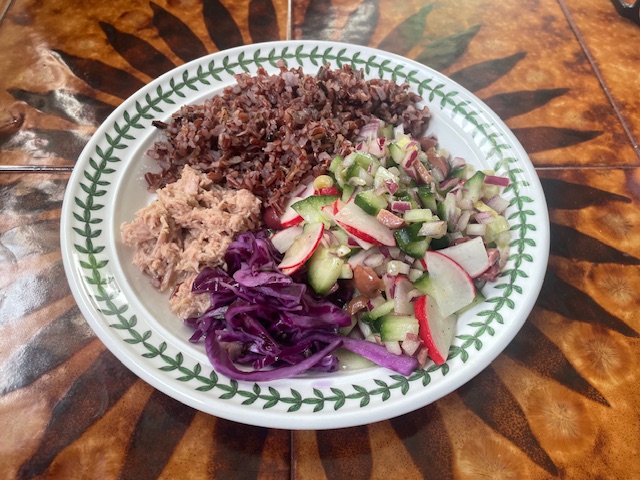
I try to eat proanthocyanidin containing food daily to protect the integrity of my arteries, veins and circulation which were damaged through surgery. Staples are red onion, radish, Kalamata olives (in salad), plus red cabbage sauerkraut and red rice, giving diversity and a layered medicinal effect.
Understanding plant chemistry words also means that rather than focusing on one plant, we can look for others with the same chemicals which are likely to share similar properties and characteristics – so using locally grown honeyberry in a similar way to bilberry.
Until the next word,
Take care.
Any questions or feedback? Contact me here.
A bibliography list is available on request for this article.