Herbal treatment for colds and flu
22 November 2025
Herbs can be helpful for managing symptoms of the cold and flu virus and may help reduce the duration and severity of illness.
Typical symptoms include fever and chills, a congested or runny nose, a sore throat, cough, shortness of breath, mucous on the chest and inflamed lungs (bronchitis). There can sometimes be subsequent infection as opportunistic bacteria proliferates in the throat, lungs or ears.
As well as helping with acute infection, herbs and nutrition can help to support our underlying terrain and immune cells, helping to prevent recurring infection.
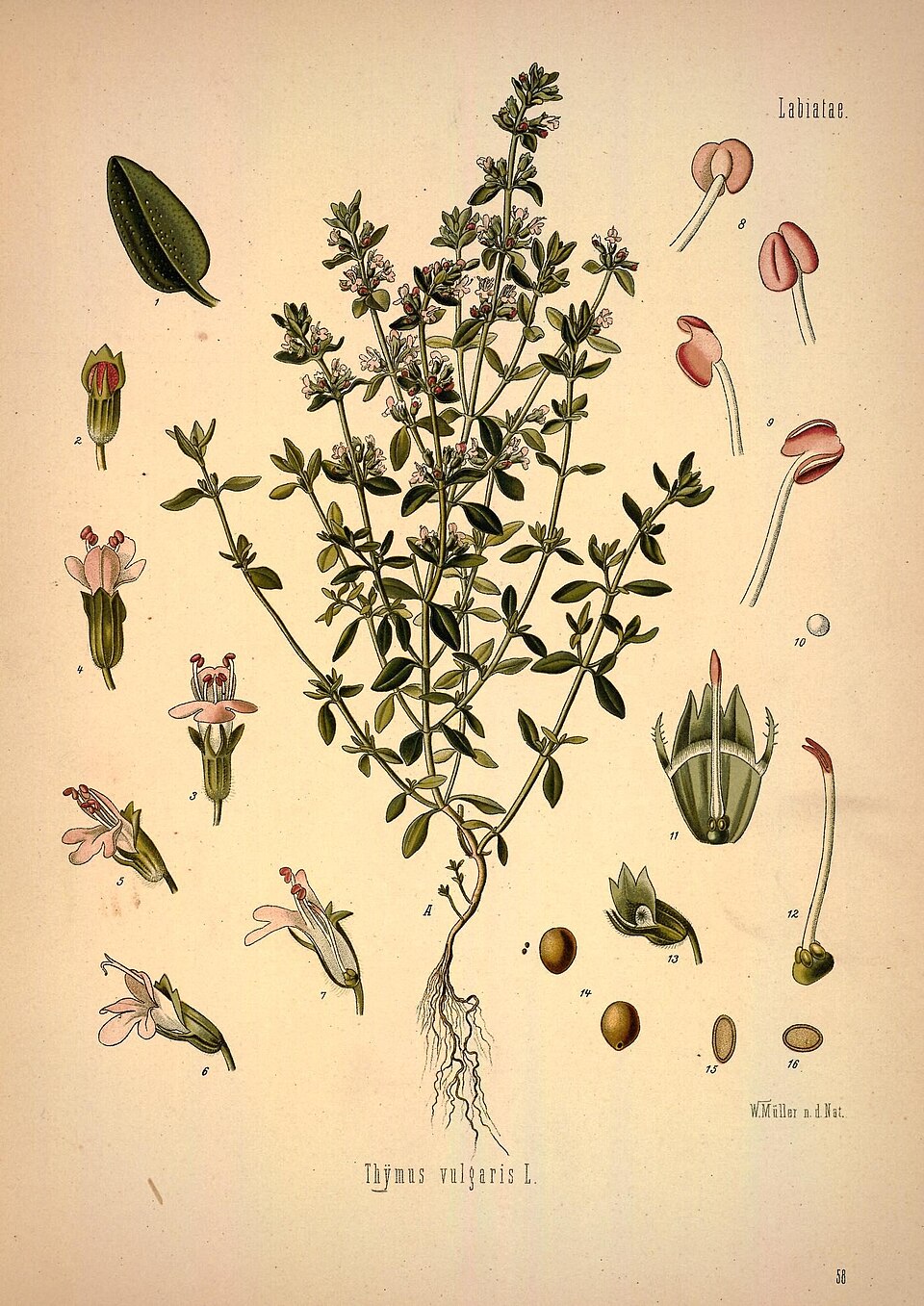
Two commonly used herbs in cold and flu preparations are culinary thyme (Thymus vulgaris), easily grown in the garden, and elderberry (Sambucus nigra), often found in woodlands and hedgerows ripening to a purple-black colour in autumn.
Thyme is pungent and fragrant, related to its high content of essential oils which are also highly antimicrobial. These essential oils, in particular thymol, have been found to be highly antimicrobial against the types of bacterial strains found in respiratory infection and inflammation (1). The herb can help open airways and clear congestion, easing shortness of breath – a fresh thyme tea can be a home remedy to try if you feel those first creeping signs of infection.
Our native elderberry has been studied in treatment of respiratory symptoms related to cold and flu. Patients who took the berry during infection had substantially reduced symptoms compared to the control group who didn’t take the berry (2).
In terms of prevention we have several plants which can act to support our underlying immunity in different ways. Echinacea (Echinacea angustofolia or Echinacea purpurea) is well known and studies have found it to increase white blood cells and strengthen their action, which can result in better immune response (3). The plant is native to north America and was used originally in indigenous medicine for severe infection. It is endangered in the wild so I use a sustainable cultivated source.
I like to combine several herbs together depending on what is being experienced to reduce individual symptoms and work on building underlying defences. Some are best for short term and some for longer term, so this should be considered.
If you’d like herbal help with lingering cold and flu symptoms or to support and strengthen your defences over winter, then drop me a message on here or book a conversation through the link below.
References:
Image: Köhler’s Medicinal Plants (1887)
1. https://doi.org/10.15421/011936
2. https://doi.org/10.1016/j.ctim.2018.12.004
3. https://doi.org/10.1002/ptr.1733