Root Word: Panacea
April 2026
This Root Word series examines the words and concepts we use in herbal medicine and practice.
The word Panacea means a solution or remedy for all difficulties or diseases; a cure-all. It originates from Panakeia, the Greek goddess of cures and healing. She was the daughter of Asclepius, the god of medicine, and often seen carrying a potion or poultice (a herbal paste or salve).
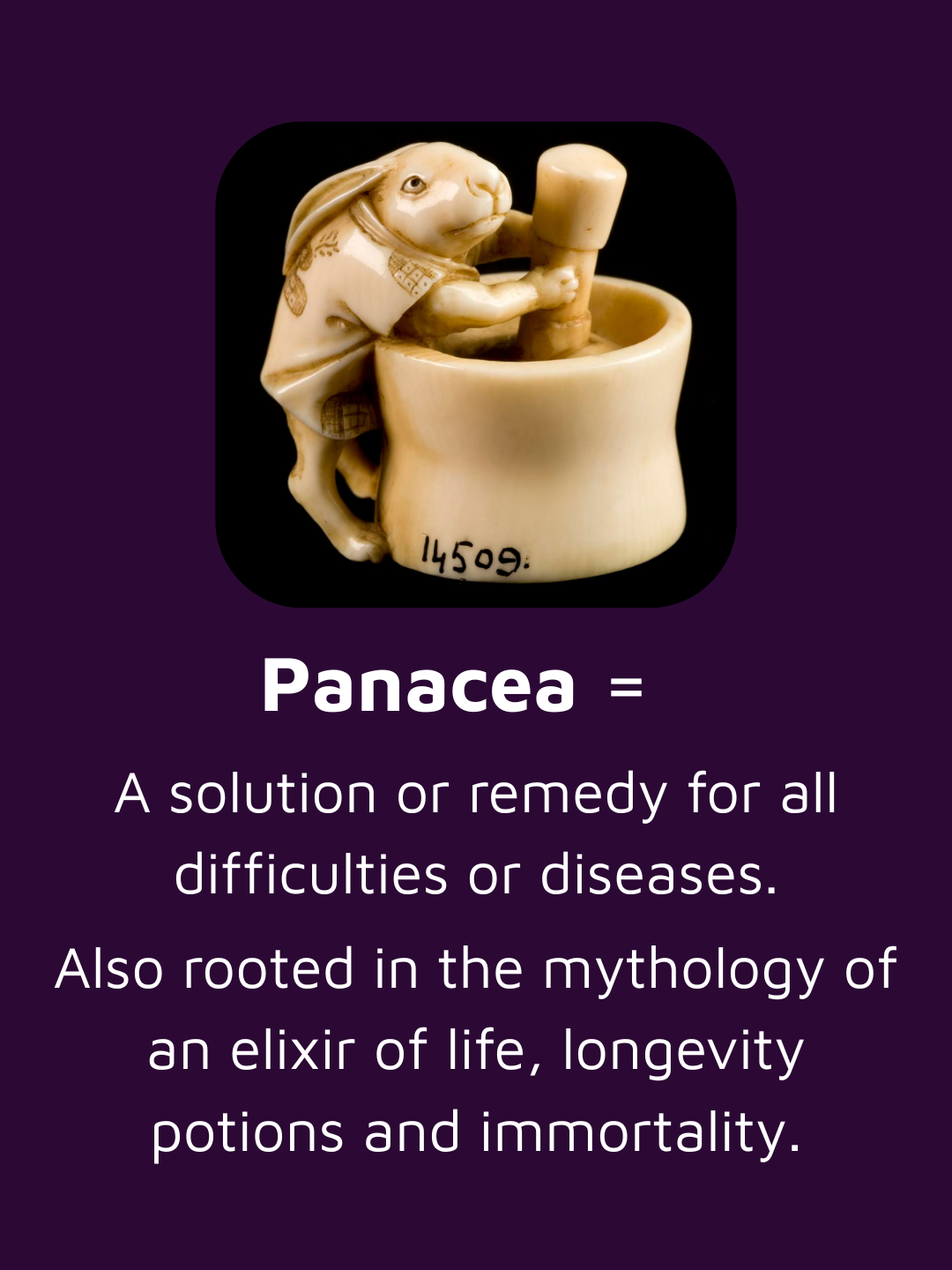
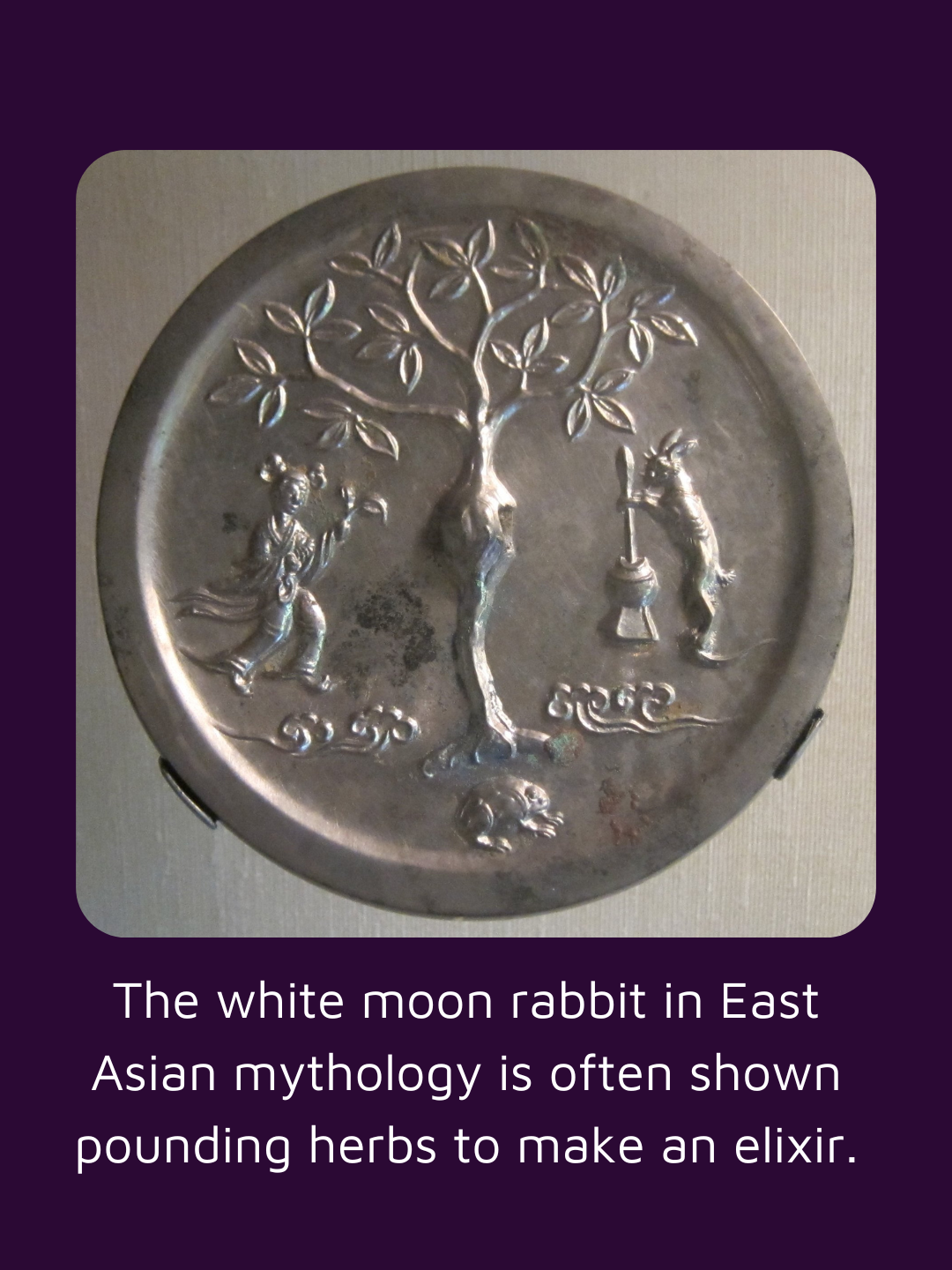
The mythology of the panacea is associated with potions for longevity and immortality, and the idea is found outside Western culture too. In China, Japan and Korea there is the folklore of the white rabbit, a creature associated with the moon, who is depicted pounding herbs for an elixir of life.
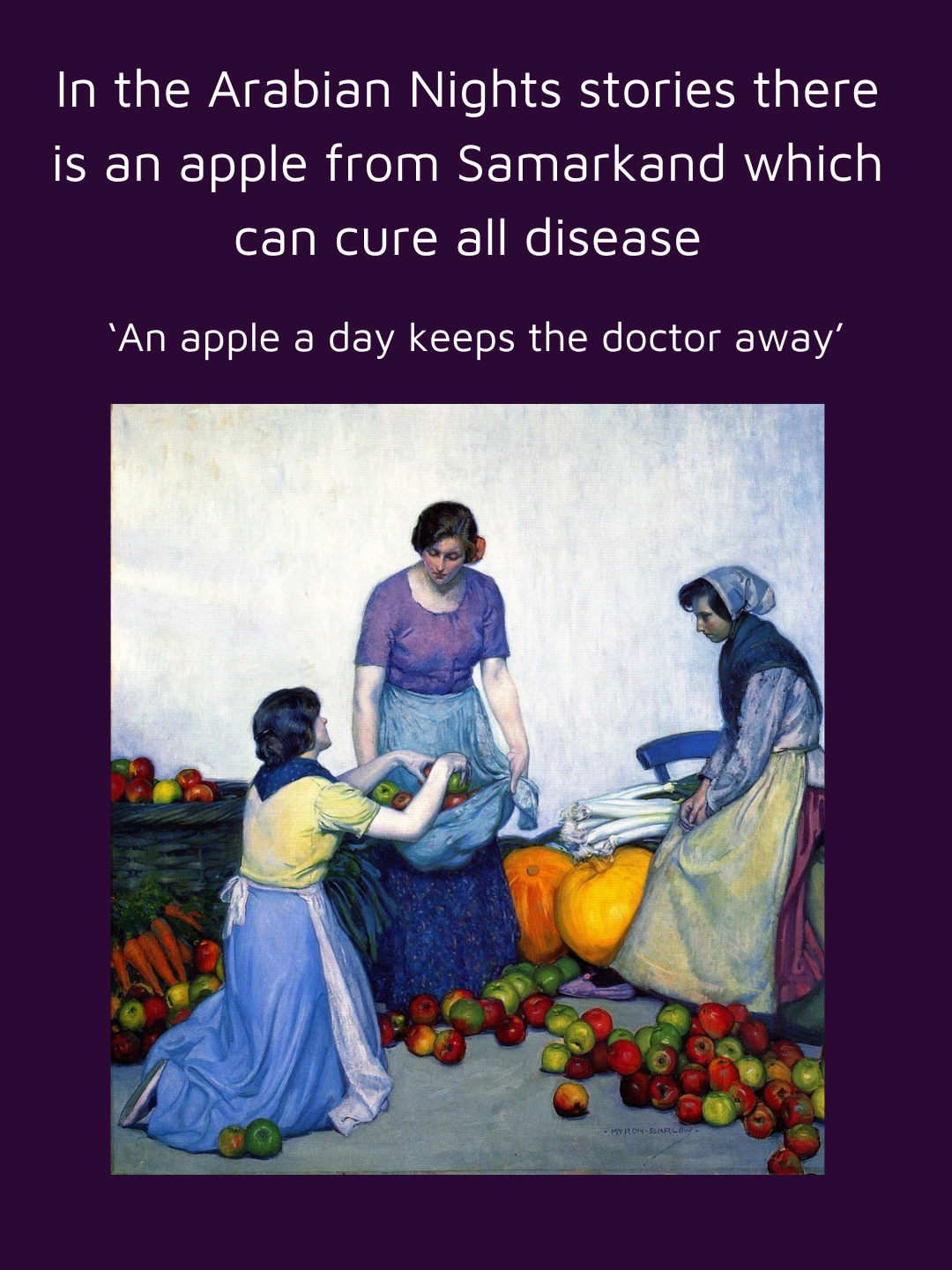
In One Thousand and One Nights, folklore tales from the Middle East, there is the story of an apple from Samarkand which can cure all disease – likely inspiration for the proverb ‘an apple a day keeps the doctor away’.
holding space
The thinking that a single remedy could cure all disease seems to be an ancient and recurring archetype, the idea was prevalent in the middle ages, and persists today. It is reflected in our pursuit of biomedical magic bullets – things like antibiotics, vaccines and insulin, life saving cures which were out of reach for past generations. In the wellness world we see influencers tout ice water baths, juice fasts and digestive cleanses a bit like panaceas.
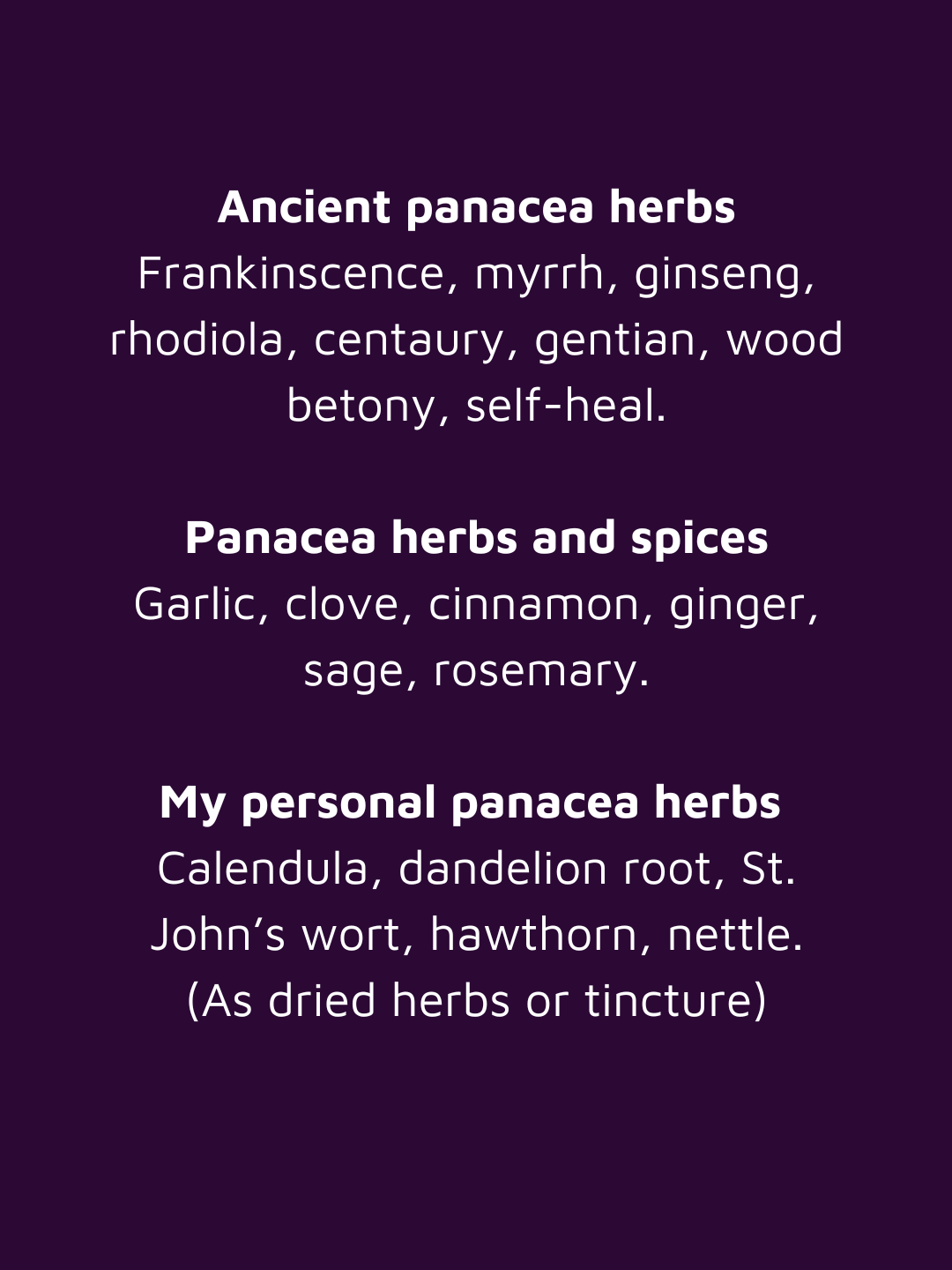
In herbal medicine, panacea herbs are described in ancient and traditional texts as way a way of highlighting their high regard and popular virtues. Many are still prized today, like the tree resins frankincense and myrrh or our culinary spices like cinnamon and fennel. Others have fallen out of favour, like wood betony – a herb I rarely use and still fail to ‘get’ or understand, but I’m sure others know better.
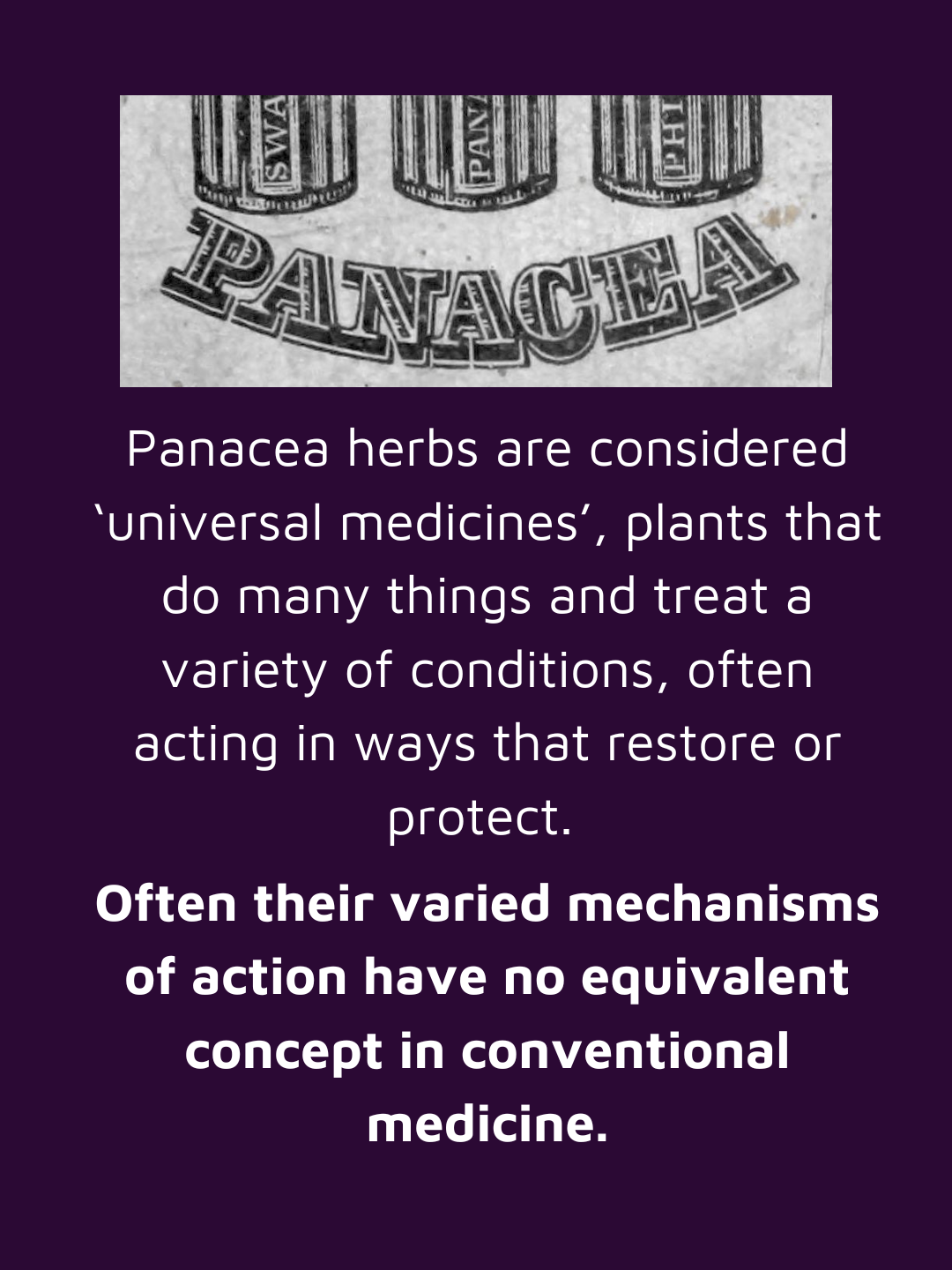
Herbs described as panaceas are not literal cure-alls, but they tend to fall into the 3 categories below:
1. They tend to be considered versatile ‘universal remedies’. They have diverse actions and do many things, meaning they can be used for many conditions. Often they will act in ways in which there is no equivalent concept in conventional medicine. In the Indian tradition ginger is considered a universal medicine.
2. They tend to restore and rejuvenate, often being protective and promoting longevity. They enhance strength, resilience, vitality and promote longevity. Panax ginseng is considered a panacea in Chinese medicine and is particularly valued for these properties.
3. They tend to have consistent, reliable and discernible effects, and are commonly used for this reason. Garlic is an example, an excellent antibacterial and lung protector, we notice the aroma passing through our lungs into our breath.
Panacea remedies have also been linked to quackery – medicines being marketed to the public as quick fixes or magical cures, without proper enquiry into the person’s condition or consideration of their constitution. This has tainted herbal medicine’s reputation and is part of the reason that I veer away from over the counter products.
One of my personal panacea herbs is calendula, for me it fits into the all of the categories above. Its latin name Calendula officinalis gives a clue to its importance – the word officinalis indicating the species was used in ancient apothecaries. It doesn’t seem to have the crown of being a panacea in old texts. Maybe unfairly so, because of it being common cultivar rather than a rare species. Or perhaps because it is a herb more suited to modern ills.
Calendula is an amazing digestive herb which acts on our lymphatics, blood and immune system, whilst also being an antibacterial and antifungal wound and tissue healer.
It encourages the liver and gall bladder to produce and release digestive juices which aid our digestion, and helps to regulate blood fat and sugars. Its gentle tannins help tone and heal the gut lining, often reducing acid reflux and bloating, and encouraging repair where there is damage or intestinal permeability (leaky gut).
Its lymphatic cleansing action can help reduce swellings and swollen glands, arthritic inflammation, and skin eruptions like hives and eczema. It is an excellent post-surgery herb, where something gentle is needed to help the immune system move the cellular debris leftover from internal incisions, which can cause trauma or haemorrhage.
It is known as ‘pot marigold’, being a herb that would be thrown into the cooking pot with others, and was an old European folk remedy to prevent sickness in winter, or what we would now call an immune tonic. Calendula as a floral tastes pleasant and often blends nicely with others to support specific actions.
Understanding traditional and modern panaceas gives helpful guidance when forming the best remedies for health problems. The folklore and language behind panaceas does tend to point us to singular cures or elixirs. I say beware of the myth of the singular cure, but at the same time do add it to your repertoire, and find your own personal practices. We can hold both.
Until the next word,
Take care.
Any questions or feedback? Contact me here.
A bibliography list is available on request for this article.