Root Word: Hot

March 2026
This Root Word series examines the words and concepts we use in herbal medicine and practice.
Hot: Adjective. Having or characterised by a high temperature or the sensation of heat.
(Oxford English Dictionary)
Often associated with fire, sun and energy, in herbal medicine hot doesn’t mean purely the sensation of heat or temperature as measured on a thermometer.
The word is used to describe states of physiology within the body AND how medicines acts on the body. Another word for this is energetics.
In Western philosophy Aristotle divided qualities in the world into four polarities: Hot, Cold, Dry and Moist.
These became linked to the elements below and formed a theory of disease and personal temperaments.
Fire – hot and dry qualities
Earth – cold and dry qualities
Water – cold and moist qualities
Air – hot and moist qualities
This coloured Italian woodcut print of 1472 gives a visual representation. Hot is above reflecting rising heat, whilst cold is below, condensing down.
Early doctors began to use these energetic terms in medicine to describe people’s conditions and plant medicines. Galen, a Roman physician born 129 CE, gave the elements ‘degrees’ with descriptions of their actions and we began to have a spectrum to describe plant medicines.

The Greek words hyper and hypo also relate to the energies of hot and cold. Hyper meaning over, above, excessive with hypo meaning under, below, deficient. These terms are used in medicine today, we may have a diagnosis or hypertension or hypothyroidism.
Culpeper’s Complete Herbal published in 1653 uses Galen’s key, and his herbal is one of few English books to have remained in continuous print since first publication, the only others being religious texts like the Bible. The framework is a popular and enduring one. Culpeper describes chamomile as hot in the first degree (weaker) whilst lavender is hot in the fourth degree (stronger). The categories don’t always make perfect sense and are debated in the herbal world, but the language becomes a tool to understand the plants more comprehensively.
At the start of the 20th century a paper published on physiomedicalism introduced a ‘tissue state’ theory, incorporating old and new thinking and expanded descriptions, including that of constriction, relaxation and other mechanisms in the body. The work reflected advances in understanding of physiology through dissection and surgery.
A century later Mathew Wood an American herbalist built on this. He described six tissue states of hot, cold, dry, moist, constriction and relaxation using broad, descriptive, vivid and case-study based explanations.
Considering traditional and descriptive language helps build understanding of what is going on in disease inside and out – more so that just learning the name and symptom markers of a diagnosed condition like hypertension.
So how does hot inform herbal practice?
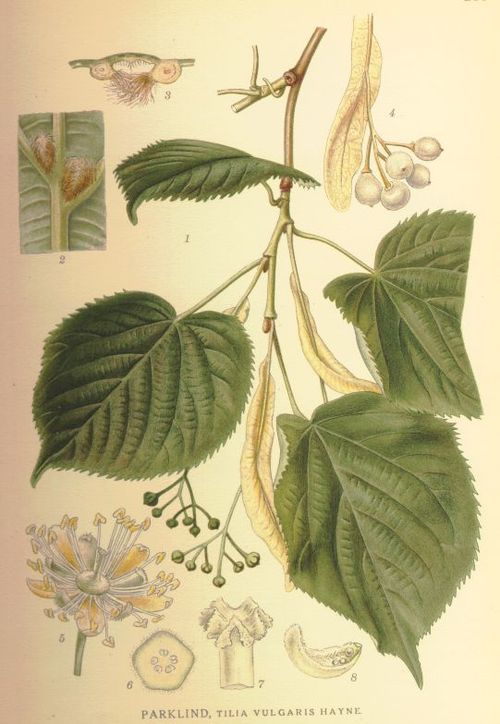
In herbal practice, for hot conditions we may consider categories of cooling herbs which act on our tissues to slow function, reduce activity, reduce inflammation and sometimes physically cool by opening the pores and dispelling heat.
Lime flower shown above very much does these things, it relaxes the blood vessels reducing pressure within. It creates perspiration which feels hot but is actually systemically cooling. Modern research has found it helpful in fever, colds and arthritis, typically hot conditions, to reduce inflammation and sensation of pain, possibly relating to its flavonoids and interaction with the serotonin system.
Conversely a well known hot and heating herb is chilli, it acts to stimulate where there is deficiency, and has a respiratory affinity. It’s great for clearing nasal and sinus congestion, or opening airways in the lungs where things have become cold – where lack of flow and movement in the tissues has caused things to become stuck. Interestingly chilli has been used in addiction centres as a tea blend for the cold deficiency of opioid withdrawal. One could say to lift, where someone has metaphorically fallen beneath to the underworld.
For me the word hot in a herbal medicine context is a word of both expansiveness and constraint. A way of sharing associated disease states and patterns, which can then be matched to plant patterns, using language which reflects our observations of nature.
Until the next word,
Take care.
Any questions or feedback? Contact me here.
A bibliography list is available on request for this article.